Sunday, January 28, 2018

Drawing your Room in a Surrealist Fashion

Our bedrooms are often our place of escape, it’s a safe refuge where we can forget about the everyday trials of our lives. For this assignment you will close the door, crank your favorite tunes, and draw your room.


The Twist is that you must distort, exaggerate, and manipulate the room’s content in
a dreamlike manner. Take a look at the “Return of Ulysses” by De Chirico.


Prerequisites:
  1. Quality work capable of being a "Breadth" part of your portfolio.
  2. It must include knowledge of perspective drawing. Your may distort the persperctive to achieve a surrealistic look.
  3. Colored pencil or black and white, your choice. Consider the use of "spot color" to emphasize a particular object.
  4. Size: 9x12 inch minimum,. White drawing paper. 
  5.  Look at the work of Rene Magritte. He sometimes manipulates the scale of objects to create his surrealistic images. (The Human Condition)
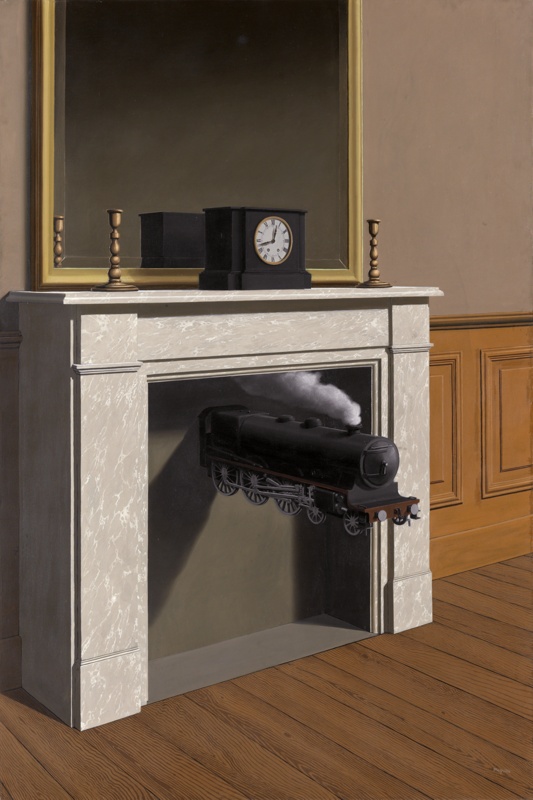
  6. In his work "Time Transfixed" Magritte depicts a normal living room with a fireplace. The twist, a locomotive is coming out of the hearth.
Due next Friday

Here are a coupe of works of art to inspire your imagination.
Personal Values, Rene Magritte
Image result
Time Transfixed, Rene Magritte
From Where the Wild Things Are by Maurice Sendak
Face of Mae West (Surrealist Apartment) Salvador Dalí [1934 - 1935]
Face of Mae West (Surrealist Apartment) Salvador Dalí 
Forbidden literature (The use of the Word), Rene Magritte

Friday, January 26, 2018

Cardboard Relief Print

We've arrived at the critical juncture where we must completely apply ourselves to our concentration. Remember all work must be submitted by May 11, 2018! That's not a lot of time. For those of you who took the AP Portfolio Development class last year, you should have a clear idea of what your concentration is and should already have completed many of your pieces. First year AP students need to take stock of their Breath pieces and get a concrete idea of what their concentration entails.

If you have work from last year to photograph, PLEASE bring it in!!

I want all of you to develop your Artist Statement within the next two weeks.

I will be introducing new media, but it is your responsibility to use that media to develop artwork within the context of your concentration.!

Keeping with my love of re-purposing materials, our next image will be a "Cardboard Relief" print.

The process is simple, take a look at this video to understand the technique.

Making a Cardboard Relief Print by Kimmy Tolbert

Image Roughed Out

Go over image in black Sharpie and start to peel back the top layer.

Coat the "plate" with matte medium.

You will ink the "plate" and print in the same fashion as a linoleum cut print. Don't expect perfection, one of the best part of experimental printmaking is the loose quality and the "happy accidents" that can occur.

Here are my results:


Some brushwork added.

Looser Look.


I made three more prints by spraying the drying ink on the "plate". Each one got progressively lighter.

Not satisfied I cut out lilly shapes out of discarded matte board. I inked the shapes and stamped over the original print. In a way, I was building the image up.

I used tracing paper to transfer the shapes to matte board.

Inked shape.


The stamped image.

I'm pretty happy with the end result!


Wednesday, December 13, 2017

Homage to the Palette

Recently I visited the home of American Impressionism, the Weir Farm in Wilton CT. As I walked the beautiful grounds I came upon this cutout of a bison. The image painted on it is of Weir's Palace, a portable artist studio that was dragged from location to location.


Weir's Palace
Naturally I thought my students would enjoy creating paintings on some kind of cut-out. Later I recalled a project in my copy of Problems:Solutions, Visual Thinking for Graphic Communication.  

Homage to the Pallette

"Within the confines of the traditional palette, either rectangular or oval shaped, transform the palette into a portrait that reflects the essential characteristics of any chosen individual."

Here is my modification:

Select a famous artist whose style interests you. Research their work and write a one page paper giving a brief description of their work and life. 

Using your own reference photograph (or paint from life) create an image that tries to emulate the feel of your artist work.

Specifications
  1. Cut our your pallette from cardboard.
  2. Trace out your pallette from my oval template.
  3. Cut with x-acto knife. Use a fresh blade as cardboard will quickly dull you knife.
  4. Prime with white acrylic.
  5. Paint your image with acrylic paint.
  6. Submit your paper along with your pallette.
The Process

Cut out the pallette from thick cardboard.
Prime with Gesso.
Use your own photo for reference.

Add depth of color.

My finished palette. Monet I'm not!


Monday, December 11, 2017

Fractured Self-portrait

My Fractured Self Portrait
I drew my portrait by looking in a mirror and you may draw directly from observation. You may borrow a mirror if you need one.

This assignment is typically given to photography students who cut and paste their images to get the result they have in mind.

  • Take several photos of yourself. Print the images out changing scale, color etc.
  • Use a glue stick to to reconstruct your image. 
  • Use this reference to draw your self portrait.
Guidelines

  1. This assignment is a drawing assignment!
  2. It should be completed by the time your come back from Holiday Break. Yes, that means it’s Homework! This is not a short sketchbook assignment. The resulting image should be "Breadth" quality.
  3. This is a pencil assignment. You can work in color or black and white. I used a triadic color scheme with the primary colors.
  4. Use white sulfate paper. 
  5. Size 12”x18”
But Mr. Boccini, I have an amazing ideas that "____________". Ok, I'm open to different ideas, but you need to sell me!


Friday, November 17, 2017

Self Portrait and Identity


Mr. Boccini, 1982

I created this pencil drawing in an illustration class many years ago. Our professor wanted us to create a portrait that communicated our personal identity. What can you tell about me from this portrait? (besides the fact I lost a lot of hair!)

  • What defines you as a person? Is it your Culture? Personality? History? Gender? Your interests or activities?
  • How can your choice of medium be used to represent these aspects of identity?
  • What do you wish to share about yourself? What do you wish to keep private? How much can a portrait show about a person?
Directions for this Assignment:
  1. Create a self portrait that will tell the viewer something about your identity. 
  2. Include objects/imagery that helps reflect who you are. 
  3. Create a "Collage" canvas out of cut paper to paint on.Use magazines, maps, concert tickets etc. We have a scanner so you can copy photos or documents that might add to your image. (ie. a birth certificate)
  4. Incorporate a "Word" or words that helps communicate your identity. Use repetition to emphasis your particular word.
  5. Use acrylic paint over your base collage.
  6. Do not cover up all of your collage, try and let it bleed through and become part of the overall image.

Fear Sketchbook Assignment

Through drawing, convey your greatest fear.

Here is a list of the top 15 fears. Do you have one of these?
1.    Arachnophobia – The fear of spiders affects women four times more (48% women and 12% men).
2.    Ophidiophobia – The fear of snakes. Phobics avoid certain cities because they have more snakes.
3.    Acrophobia – The fear of heights. Five percent of the general population suffer from this phobia.
4.    Agoraphobia – The fear of open or crowded spaces. People with this fear often wont leave home.
5.    Cynophobia – The fear of dogs. This includes everything from small Poodles to large Great Danes.
6.    Astraphobia – The fear of thunder/lightning AKA Brontophobia, Tonitrophobia, Ceraunophobia.
7.    Claustrophobia – The fear of small spaces like elevators, small rooms and other enclosed spaces.
8.    Mysophobia – The fear of germs. It is also rightly termed as Germophobia or Bacterophobia.
9.    Aerophobia – The fear of flying. 25 million Americans share a fear of flying.
10. Trypophobia – The fear of holes is an unusual but pretty common phobia.
11. Carcinophobia – The fear of cancer. People with this develop extreme diets.
12. Thanatophobia – The fear of death. Even talking about death can be hard.
13. Glossophobia – The fear of public speaking. Not being able to do speeches.
14. Monophobia – The fear of being alone. Even while eating and/or sleeping.
15. Atychiphobia – The fear of failure. It is the single greatest barrier to success.
                                               
Make this a dynamic and powerful drawing that illustrates your fear.

Make your marks (pen or pencil strokes) active and support your idea.

Use Colored Pencil or Markers

Your drawing should be in your sketchbook.

See you tomorrow,

Mr. B


Architectural Concentration

Take photos of architecture for reference.


Make a tight drawing of the image.


Create a Mono Print from your drawn image.

Watch the video "Monoprinting with watercolors".

Paint a “Abstract Impressionistic” painting based on the shapes found in your original image (acrylic)